
VIRTUAL ART EXHIBITION
VIRTUAL ART EXHIBITION
VIRTUAL ART EXHIBITION
BACHELOR PART I
BACHELOR PART I
Project Overview:
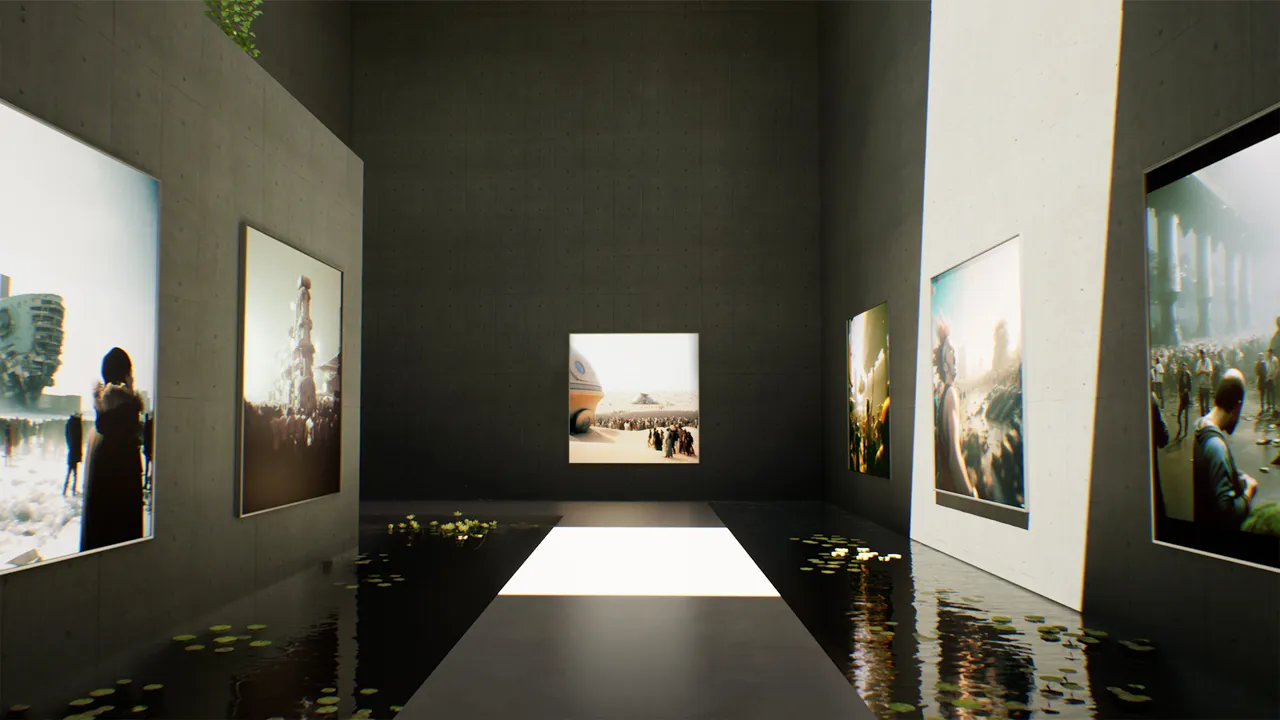
This project was developed as part of my bachelor thesis and explores virtual spaces as cultural venues shaped by real-time technology and artificial intelligence. Built in Unreal Engine 5, the experience is structured as a connected digital environment that blends an interactive art exhibition with a virtual DJ performance.
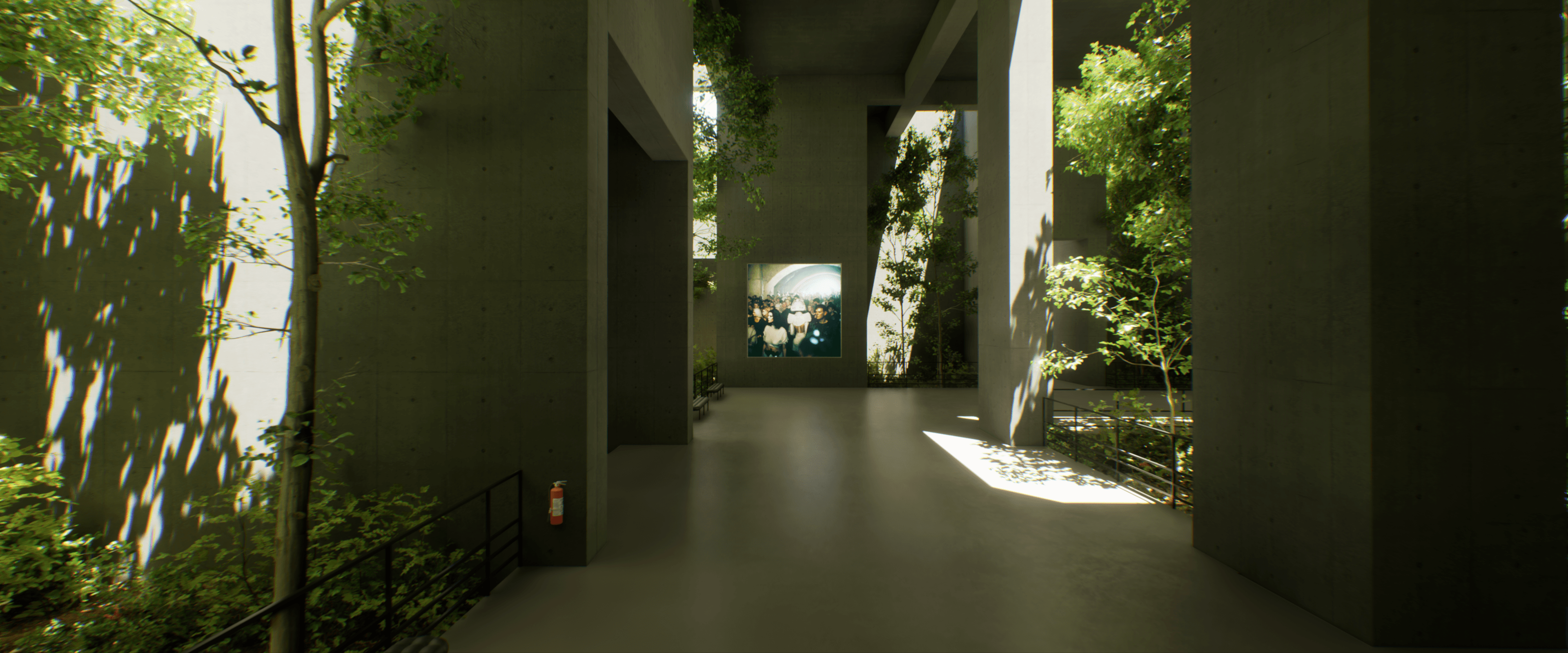
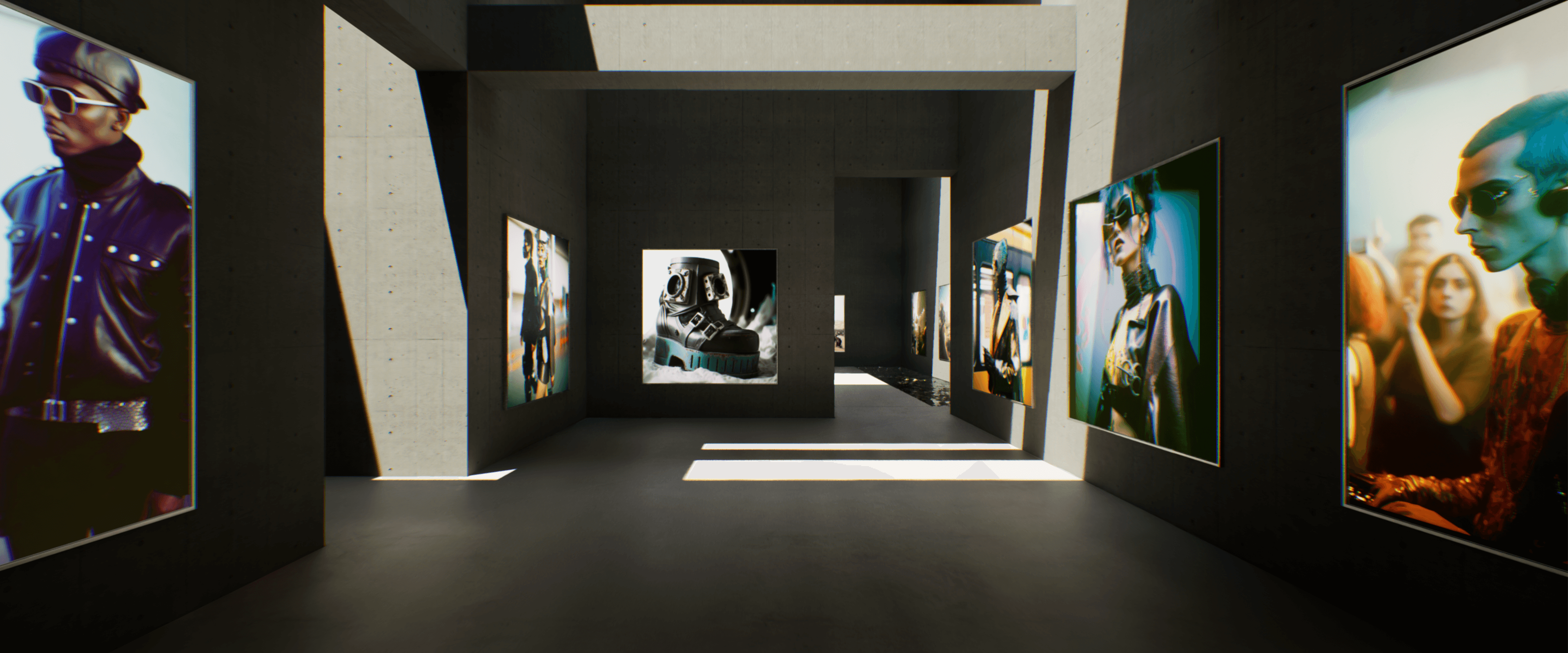
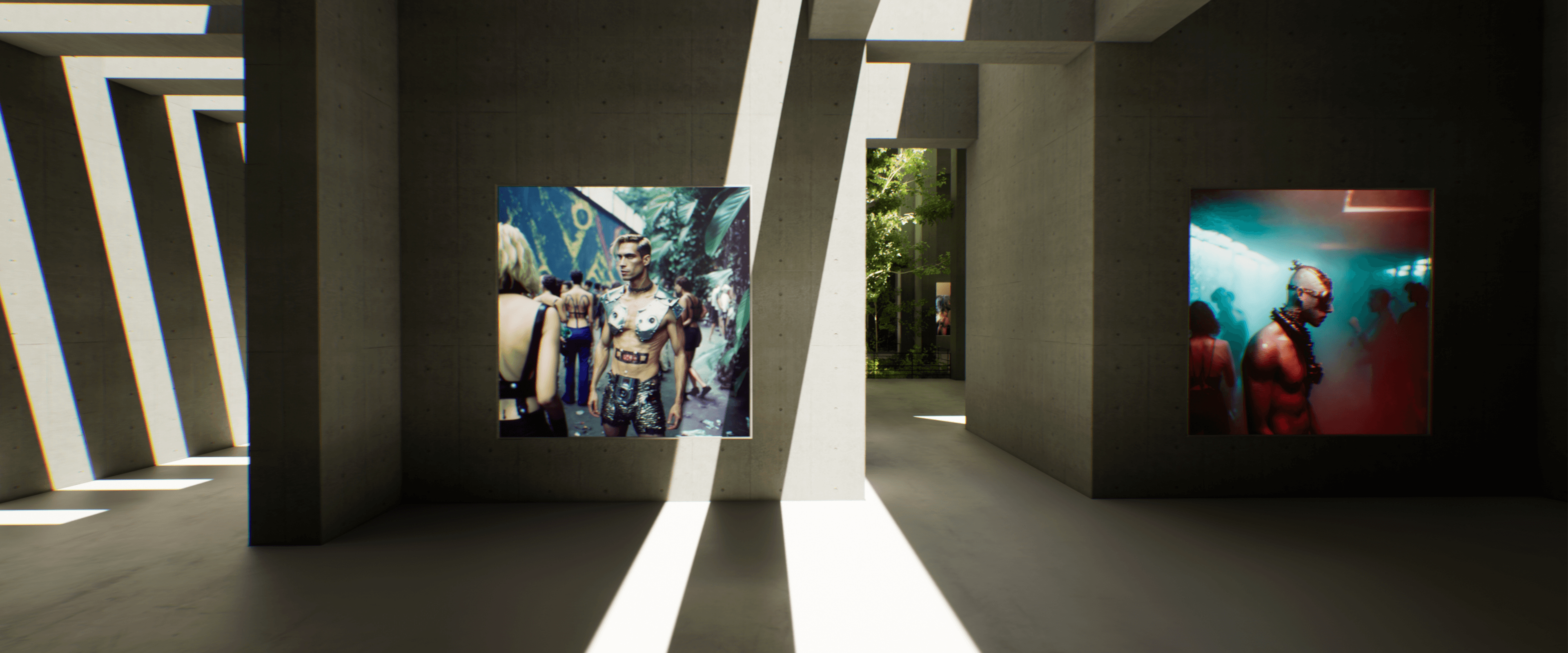
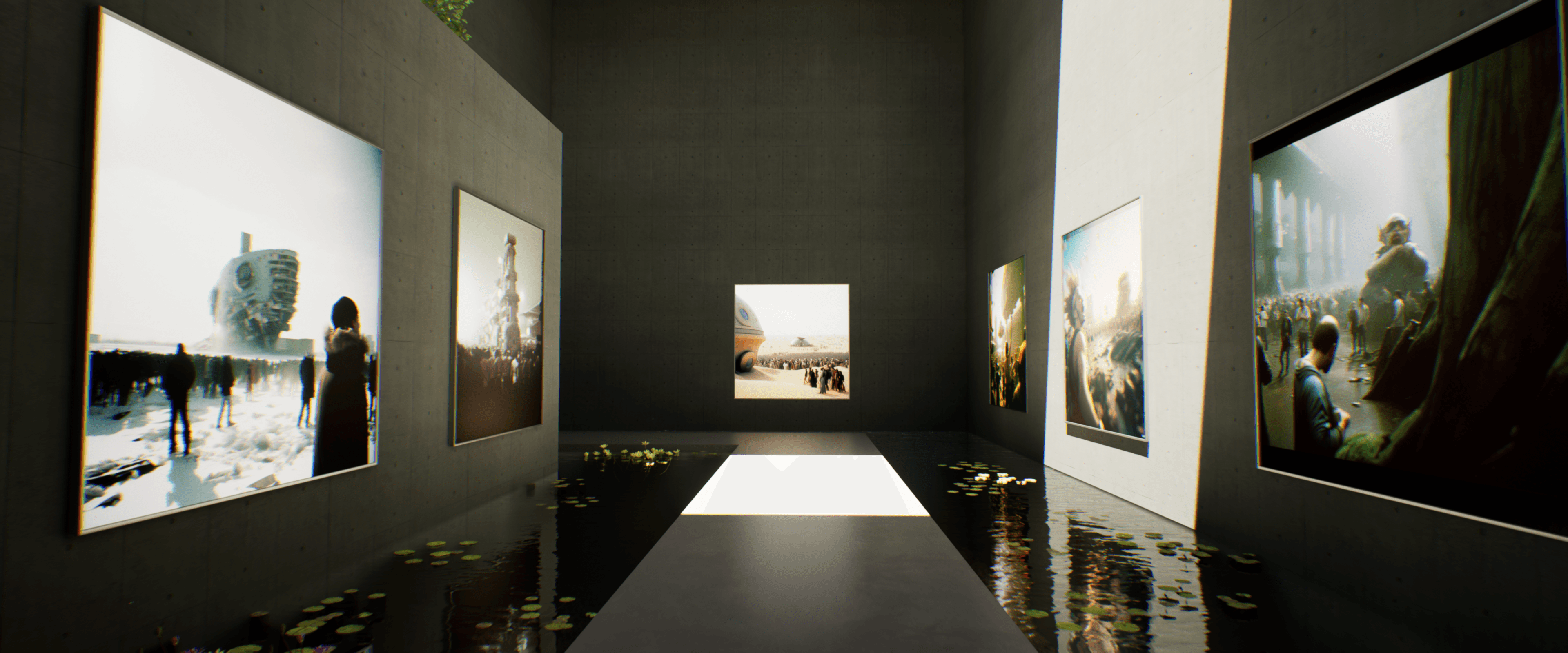
The first part of the experience is a virtual art exhibition featuring AI-generated artworks that speculate on rave culture, future club aesthetics, and imagined scenarios beyond physical reality. By combining immersive spatial design with AI-driven imagery and cross-platform accessibility, the project reflects how artificial intelligence can influence creative expression and redefine how digital events and exhibitions are experienced today.
Responsibilities:
I was responsible for the complete visual direction of the project, including concept development, environment and level design, asset creation, AI image generation, lighting, and real-time rendering in Unreal Engine 5. The project was developed in collaboration with Moritz Till, who focused on the technical implementation, including navigation systems and camera workflows.
This bachelor thesis project explores virtual spaces as cultural venues using real-time technology and AI, combining an interactive art exhibition of AI-generated rave-inspired works with a virtual DJ performance in Unreal Engine 5.
Project Overview:
This project was developed as part of my bachelor thesis and explores virtual spaces as cultural venues shaped by real-time technology and artificial intelligence. Built in Unreal Engine 5, the experience is structured as a connected digital environment that blends an interactive art exhibition with a virtual DJ performance.
The first part of the experience is a virtual art exhibition featuring AI-generated artworks that speculate on rave culture, future club aesthetics, and imagined scenarios beyond physical reality. By combining immersive spatial design with AI-driven imagery and cross-platform accessibility, the project reflects how artificial intelligence can influence creative expression and redefine how digital events and exhibitions are experienced today.
Responsibilities:
I was responsible for the complete visual direction of the project, including concept development, environment and level design, asset creation, AI image generation, lighting, and real-time rendering in Unreal Engine 5. The project was developed in collaboration with Moritz Till, who focused on the technical implementation, including navigation systems and camera workflows.
(Client)
Bachelor Thesis I
(Software)
Unreal Engine 5
Davinci Resolve
Midjourney
(Year)
2023
(Services)
Immersive Spaces
Level Design
Artificial Intelligence


Project Overview:
This project was developed as part of my bachelor thesis and explores virtual spaces as cultural venues shaped by real-time technology and artificial intelligence. Built in Unreal Engine 5, the experience is structured as a connected digital environment that blends an interactive art exhibition with a virtual DJ performance.
The first part of the experience is a virtual art exhibition featuring AI-generated artworks that speculate on rave culture, future club aesthetics, and imagined scenarios beyond physical reality. By combining immersive spatial design with AI-driven imagery and cross-platform accessibility, the project reflects how artificial intelligence can influence creative expression and redefine how digital events and exhibitions are experienced today.
Responsibilities:
I was responsible for the complete visual direction of the project, including concept development, environment and level design, asset creation, AI image generation, lighting, and real-time rendering in Unreal Engine 5. The project was developed in collaboration with Moritz Till, who focused on the technical implementation, including navigation systems and camera workflows.